


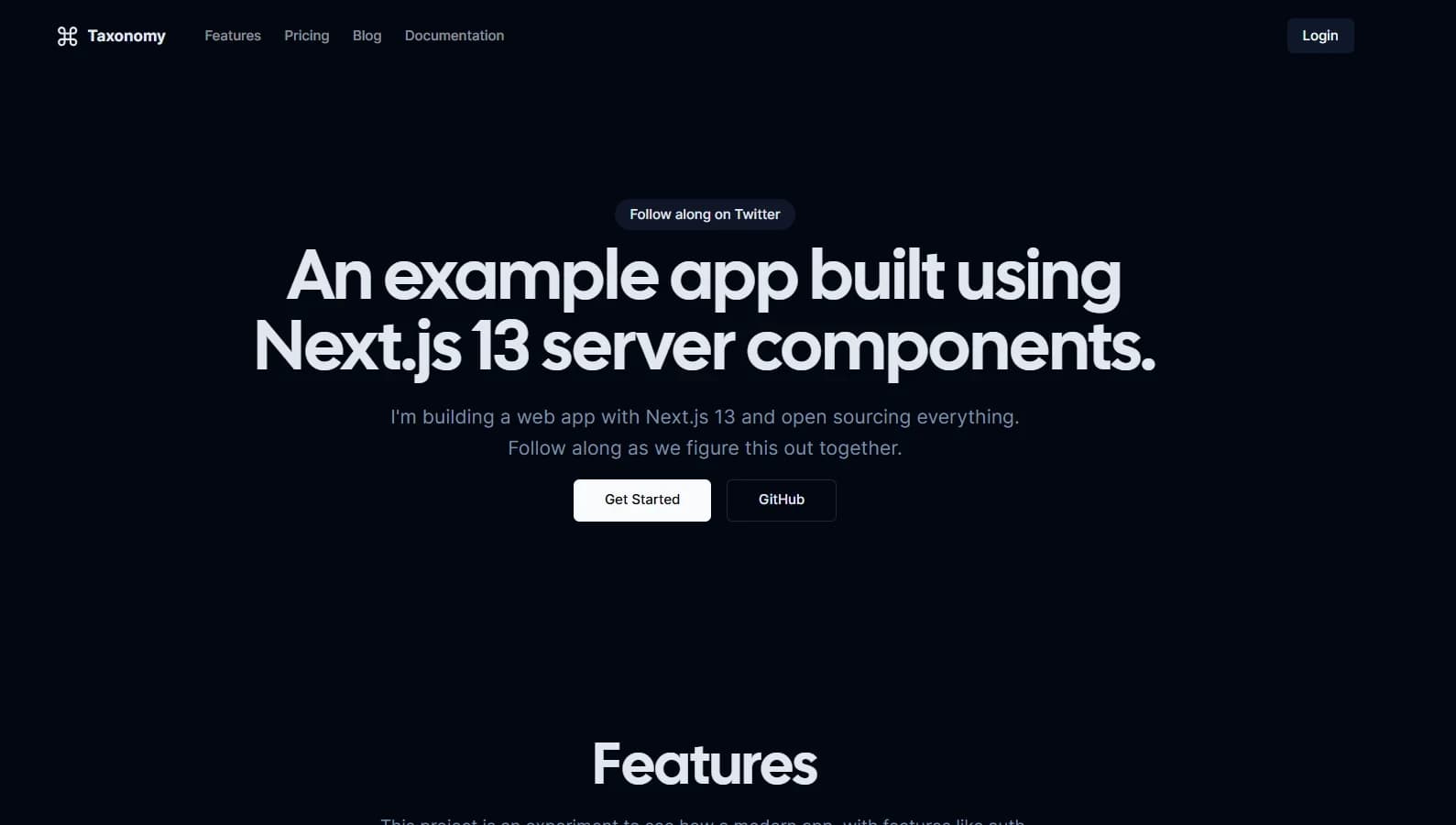
Taxonomy is a feature-rich Next.js boilerplate built to explore how a modern, full-stack application works using Next.js 13, React 18, and the new App Router. It showcases real-world patterns such as authentication, subscriptions, API routes, dashboards, and documentation - all implemented using the latest Next.js architecture.
This project is ideal for developers who want a production-grade reference, a strong foundation for SaaS products, or a learning resource for building scalable applications with server components.
Next.js App Router (/app directory)
Uses modern routing with layouts, nested layouts, and layout groups.
Server & Client Components
Demonstrates best practices for mixing server and client components effectively.
Authentication with NextAuth.js
Secure authentication flow ready for real-world applications.
Subscription & Payments (Stripe)
Built-in subscription logic suitable for SaaS products.
API Routes & Middlewares
Backend logic handled directly within Next.js using route handlers.
Database & ORM
Prisma ORM with PlanetScale database integration.
Data Fetching, Caching & Mutations
Modern data handling using Next.js caching and revalidation strategies.
Loading & Error UI
Built-in loading states and UI feedback for better UX.
UI Components with Radix UI
Accessible, reusable, and composable UI components.
Docs & Blog System
Documentation and blog powered by MDX and Contentlayer.
Form Validation
Robust validation using Zod.
Styled with Tailwind CSS
Utility-first, responsive styling system.
Fully Typed
Written entirely in TypeScript for safety and scalability.
SaaS dashboards
Subscription-based applications
Authentication-heavy platforms
Learning advanced Next.js 13 patterns
Developers building scalable, modern web apps
Taxonomy uses the new /app directory and embraces Next.js server components to demonstrate advanced routing, layouts, data fetching, and performance patterns. It combines modern tooling with a clean UI system and strong type safety, making it a solid base for complex applications.
⚠️ Note: This project uses experimental features from Next.js 13 and React 18. Some features may change as the ecosystem stabilizes.
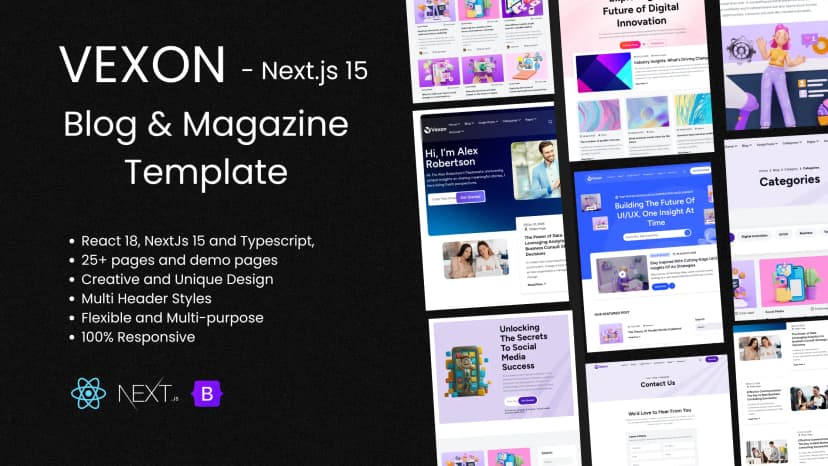
Vexon is a multipurpose Next.js template suited for blogs and magazines. It captures the essence of contemporary lifestyles with an intriguing and ele
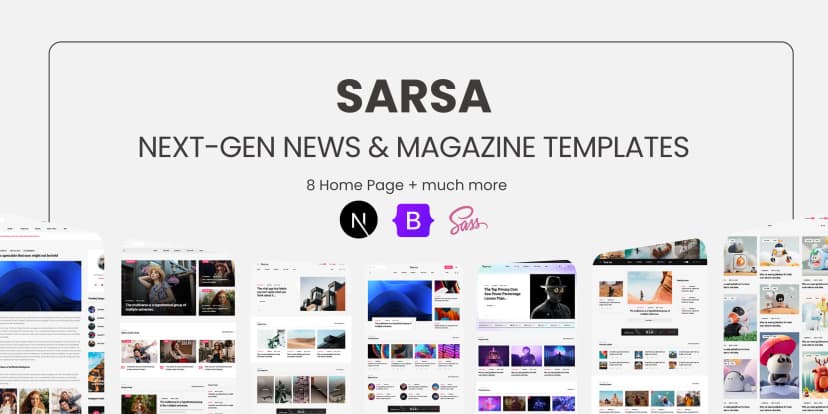
Sarsa News and Magazine NextJS Template. It focuses on the following categories: blogs, sports, fashion, science, soccer, politics, videos, travel, s
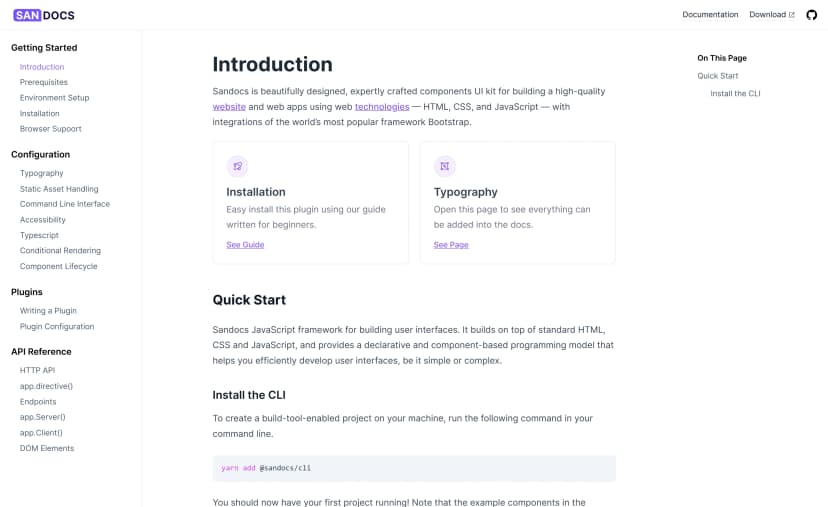
SanDocs is a free and open-source documentation template built specifically for creating modern, fast, and user-friendly documentation websites. Desig